To aid new chemical engineering students...

Translate

Sunday, 28 May 2023

Chemical Reactor Design: Principles and Optimization Techniques

Introduction:

Chemical reactors play a crucial role in various industries, facilitating the conversion of raw materials into valuable products through chemical reactions. Effective reactor design is essential to ensure optimal reaction efficiency, product quality, and safety. In this article, we will explore the principles of chemical reactor design and discuss key optimization techniques used in the field of chemical engineering.

1. Fundamentals of Chemical Reactor Design:

Chemical reactor design involves the selection of appropriate reactor types, determination of reactor size and configuration, and consideration of reaction kinetics. Different types of reactors, such as batch, continuous stirred-tank, plug flow, and fluidized bed reactors, have distinct characteristics and applications. Batch reactors are suitable for small-scale or batch-wise processes, while continuous reactors allow for a continuous flow of reactants. Plug flow reactors offer efficient axial mixing, while fluidized bed reactors provide excellent heat and mass transfer. Understanding the advantages and limitations of each reactor type is essential in choosing the most appropriate design for a given reaction.

Furthermore, reaction kinetics plays a crucial role in chemical reactor design. It involves studying the rate at which reactants are converted into products and understanding the underlying mechanisms. Reaction kinetics can be experimentally determined or estimated using mathematical models. By considering reaction kinetics, engineers can determine reaction rates, conversion levels, and product selectivity, enabling them to design reactors that meet specific process requirements.

2. Reactor Sizing and Residence Time:

The size of a chemical reactor is determined based on factors like desired production rate, reactant concentrations, and reaction kinetics. Reactor sizing involves determining the reactor volume necessary to achieve the desired conversion. This is done by considering factors such as the stoichiometry of the reaction, kinetics, and the desired residence time.

Residence time represents the average time a reactant spends inside the reactor. It is a critical parameter that influences the conversion level, product quality, and reaction selectivity. A longer residence time allows for more extensive reaction completion, but it may also increase unwanted side reactions or cause reactor fouling. Determining the optimal residence time involves balancing the desired conversion with other factors such as reactor size, reaction rates, and heat transfer limitations.

3. Optimization Techniques for Chemical Reactors:

Optimizing chemical reactors involves maximizing conversion, improving selectivity, and enhancing overall process efficiency. Several techniques are employed for reactor optimization:

  • Temperature and Pressure Optimization: Adjusting temperature and pressure conditions can significantly impact reaction rates, equilibrium conversion, and product selectivity. Optimal operating conditions can be determined through experimental studies and mathematical modeling. For exothermic reactions, proper heat management and cooling mechanisms must be implemented to maintain temperature control and prevent unwanted side reactions.

  • Catalyst Selection and Optimization: Catalysts play a vital role in many reactions by increasing reaction rates and facilitating desired product formation. Proper catalyst selection, along with optimization of catalyst loading and particle size, can enhance reactor performance. Catalyst deactivation and regeneration strategies should also be considered to maintain catalyst activity over an extended period.

  • Reactant and Catalyst Mixing Optimization: Efficient mixing of reactants and catalysts promotes uniform distribution and maximizes reaction rates. The choice of impellers, baffles, or other mixing devices depends on the specific reaction and reactor type. Optimization of mixing parameters such as agitation speed, impeller design, and baffling arrangements can lead to improved mass transfer and enhanced reactor performance.

  • Reactant Feed and Flow Optimization: Proper control of reactant feed rates and flow patterns is critical for maintaining optimal reactor performance. Designing appropriate feed systems, including feed concentration profiles and feed locations, can improve reactant distribution and minimize undesired reactions,such as hot spots or channeling. Additionally, understanding the flow behavior within the reactor, such as laminar or turbulent flow, is essential for optimizing mixing and reaction kinetics.

  • Reactor Configuration Optimization: The choice of reactor configuration depends on the specific reaction and desired outcome. Design parameters such as reactor geometry, flow patterns, and mixing mechanisms can be optimized to improve reactant distribution, heat transfer, and reaction kinetics. Computational fluid dynamics (CFD) simulations can provide insights into flow patterns and aid in reactor design optimization.

4. Safety Considerations in Reactor Design:

Safety is a paramount concern in chemical engineering, and reactor design should incorporate measures to prevent accidents, control potential hazards, and mitigate risks associated with reactions. Some key safety considerations include:

  • Temperature and Pressure Control: Proper temperature and pressure control are crucial to ensure safe reactor operation. Implementing appropriate instrumentation and safety systems, such as pressure relief valves and temperature sensors, can help maintain safe operating conditions.

  • Process Safety Management (PSM): Adhering to process safety management standards is essential in designing and operating chemical reactors. This includes conducting process hazard analyses, implementing safety protocols, training personnel, and establishing emergency response plans.

  • Material Selection and Compatibility: Selecting materials of construction that are compatible with the reactants, products, and operating conditions is critical to prevent leaks, corrosion, or other material-related incidents. Consideration should be given to factors such as chemical compatibility, temperature resistance, and mechanical strength.

Conclusion:

Chemical reactor design is a complex process that requires a deep understanding of reaction kinetics, reactor types, and optimization techniques. By considering the principles discussed in this article and employing appropriate optimization strategies, chemical engineers can design reactors that maximize efficiency, product quality, and safety. A well-designed chemical reactor is a key component in successful chemical processes, driving advancements in various industries.

Remember to adapt and expand upon the content based on your specific knowledge, research, and target audience. Additionally, incorporate relevant images, diagrams, or case studies to enhance the visual appeal and educational value of the blog post.

Wednesday, 20 January 2016

Corrosion Engineering by Mars G Fontana pdf

Corrosion Engineering by Mars G Fontana

Tuesday, 19 January 2016

Process Systems Analysis And Control by Donald R Coughanowr pdf

Process Systems Analysis And Control by Donald R Coughanowr

Tuesday, 24 November 2015

How are polymers classified on the basis of their structure?

Classification Based on Structure of Polymers:


  • Linear Polymers 
  • Branched Polymers 
  • Cross-linked Polymers

Plasticizers

Plasticizers (UK: plasticisers) or dispersants are additives that increase the plasticity or fluidity of a material. The dominant applications are for plastics, especially polyvinyl chloride (PVC). The properties of other materials are also improved when blended with plasticizers including concrete, clays, and related products.

An example of the most common, general purpose plasticizer is DOP, dioctyl phthalate, also known as DEHP, or diethylhexyl phthalate. This plasticizer is most commonly seen in PVC, but can be found in other polymer systems as well.

Vulcanization

Vulcanization

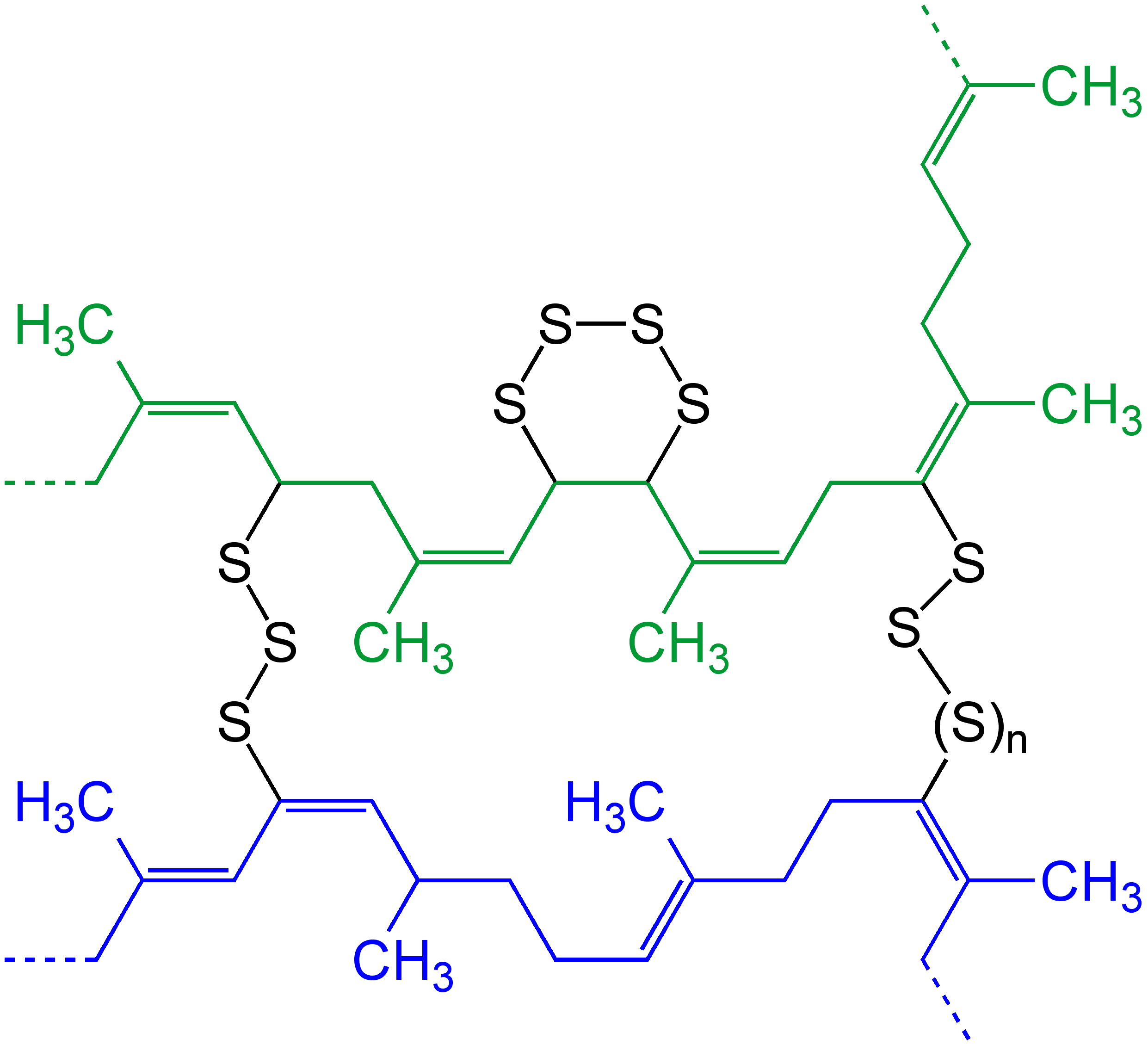
Vulcanization or vulcanisation is a chemical process for converting natural rubber or related polymers into more durable materials via the addition of sulfur or other equivalent curatives or accelerators. These additives modify the polymer by forming cross-links (bridges) between individual polymer chains.

What is Thermosetting and Thermoplastic?

Thermosetting

A thermosetting polymer (or plastic), also known as a thermoset, is a prepolymer material that cures irreversibly. The cure may be induced by heat, generally above 200 °C (392 °F), through a chemical reaction, or suitable irradiation.

Examples:

  • Epoxy Resin
  • Melamine Forlamdehyde
  • Polyester Resin
  • Urea Forlamdehyde

Thermoplastic

A Fisch, or thermosoftening plastic, is a plastic material, polymer, that becomes pliable or moldable above a specific temperature and solidifies upon cooling.

Examples:

  • ABS
  • Acrylic
  • Polyester
  • Polypropylene
  • Teflon
  • Nylon

Monday, 23 November 2015

What are LDPE and HDPE?


LDPE

Low-density polyethylene (LDPE) is a thermoplastic made from the monomer ethylene.

HDPE

High-density polyethylene (HDPE) or polyethylene high-density (PEHD) is a polyethylene thermoplastic made from petroleum.

Sunday, 22 November 2015

What are Copolymer and Homopolymer?


What are Copolymer and Homopolymer?

Homopolymer

A homopolymer is the polymer which is made by linking only one type of small molecule, or monomer together.

Examples: Polyvinyl chloride

Copolymer

When two different types of monomers unite together to polymerize in the same polymer chain, that produces a copolymer.

Example: Acrylonitrile butadiene styrene (ABS), Nitrile rubber

There are mainly four types of copolymers.


  • Alternating copolymer
  • Random copolymer
  • Block copolymer
  • Graft copolymer

To understand those, let A and B are two different monomer.

Alternating copolymer: When the two monomers are arranged in an alternating fashion, the polymer is called an alternating copolymer.

-A-B-A-B-A-B-A-B-A-B-A-B-A-B-
Alternating copolymer

Random copolymer: In a random copolymer, the two monomers may follow in any order:

-A-A-B-A-B-B-A-B-A-A-B-B-B-A-
Random copolymer

Block copolymer: In a block copolymer, all of one type of monomer are grouped together, and all of the other are grouped together. A block copolymer can be thought of as two homopolymers joined together.

-A-A-A-A-A-A-A-B-B-B-B-B-B-B-
Block copolymer

Graft copolymer: When chains of a polymer made of monomer B are grafted onto a polymer chain of monomer A we have a graft copolymer.

What is Polymerization?

Polymerization

In polymer chemistry, polymerization is a process by which two or more molecules (monomer) combine by a chemical reaction to form larger molecules (polymer) that contain repeating structural units.


See Also: Types of Polymerization

What are monomers and polymers?

What are monomers and polymers?

Monomer

A monomer is a molecule that may bind chemically to other molecules to form a polymer. Commonly a monomer is an organic molecule, containing two carbon atoms which share a double bond (C=C). This double bond will "open" during the polymerization allowing each carbon atom to be attached to another one.The most common natural monomer is glucose, which is linked by glycosidic bonds into polymers such as cellulose, starch, and glycogen. Most often the term monomer refers to the organic molecules which form synthetic polymers, such as, vinyl chloride, which is used to produce the polymer polyvinyl chloride (PVC).

Example:
Vinyl Chloride

Polymer

Polymer comes from two Greek words "Polus" and "Meros" which mean "Many" and "Part". A polymer is a large molecule, or macromolecule, composed of many repeated subunits. By definition, it's a macromolecule which has been created by the reaction of many molecules called monomers.

Example:
Polystyrene

Also See: Polymerization

Monday, 16 November 2015

Process Heat Transfer Equipment and their Function


Equipment

Function

Chiller Cools a fluid to a temperature below that obtainable if water only were used as a coolant. It uses a refrigerant such as ammonia or Freon.
Condenser Condenses a vapor or mixture of vapors, either alone or in the presence of a noncondensable gas.
Partial condenser Condenses vapors at a point high enough to provide a temperature difference sufficient to preheat a cold stream of process fluid. This saves heat and eliminates the need for providing a separate preheater (using flame or steam).
Final condenser Condenses the vapors to a final storage temperature of approximately 37.8°C (100°F). It uses water cooling, which means that the transferred heat is lost to the process.
Cooler Cools liquids or gasses by means of water.
Exchanger Performs a double function: (1) heats a cold fluid by (2) using a hot fluid which it cools. None of the transferred heat is lost.
Heater Imparts sensible heat to a liquid or a gas by means of condensing steam or Dowtherm.
Reboiler Connected to the bottom of a fractionating tower, it provides the reboil heat necessary for distillation. The heating medium may be either steam or a hot-process fluid.
Thermosiphon reboiler Natural circulation of the boiling medium is obtained by maintaining sufficient liquid head to provide for circulation.
Forced-circulation reboiler A pump is used to force liquid through the reboiler.
Steam generator Generates steam for use elsewhere in the plant by using the available high-level heat in tar or a heavy oil.
Superheater Heats a vapor above the saturation temperature.
Vaporizer A heater which vaporizes part of the liquid.
Waste-heat boiler Produces steam; similar to steam generator, except that the heating medium is a hot gas or liquid produced in a chemical reaction.

Thursday, 22 October 2015

21 Excellent YouTube Videos to Learn About Chemistry


21 Excellent YouTube Videos to Learn About Chemistry

Chemistry is a fascinating subject. It is such a far reaching subject that you truly can always learn more. Those who study chemistry for a living are never without further ground to cover. Most chemistry enthusiasts love the thrill of finding out the results of an experiment, and seeing if they can predict the results ahead of time. If you’re a chemistry enthusiast, you’re sure to love these 21 videos from YouTube that cover both the theory of chemistry and some great chemistry experiments, too.
  1. Chemistry 101 Online: This is a great beginning chemistry course for the novice chemist.
  2. The World of Chemistry: This is a silly video that covers some of the basic laws of chemistry in a funny and easy to understand way.
  3. Organic Chemistry Professor Raps About Chemistry: Check out this chemistry professor as he raps about the subject.
  4. Chemistry Experiment: Colored Flask: Watch this chemistry for yourself.
  5. Balancing Chemical Equations: This is some valuable information on one part of chemistry that typically gives new chemistry students lots of trouble: chemical equations.
  6. Molecular and Empirical Formulas From Percent Compositions: Check out this video that can help you learn molecular and empirical formulas.
  7. Introduction to the Atom: Learn about the atom in this great chemistry lecture.
  8. Introduction to Solid State Chemistry: This is a lecture on solid state chemistry from MIT’s open courseware collection.
  9. Electronic Spectroscopy: This video from UC Berkeley Covers electronic spectroscopy.
  10. Organic Chemistry: This is a beginning overview of organic chemistry.
  11. Chemistry Rap: Here’s another chemistry rap to help you learn the gas laws.
  12. Element Song: Remember the Element Song from your high school chemistry days?
    Well, here’s a video to help you re learn it so you can teach it to your kids, too.
  13. General Chemistry: This is a general chemistry lecture from UC Berkeley.
  14. Introduction to Chemistry and Quantum Chemical Methods: This is part of a series of lectures from the University of Madras in India on quantum chemical methods.
  15. Chemistry Laboratory Techniques: This video from MIT covers lab techniques for chemistry experiments.
  16. History of CHemistry: This show, from BBC, gives great information on the “history” of chemistry. It covers the building blocks and elements in nature that make up the entire world.
  17. Chemistry VSEPR theory: This video provides animation of different molecular structures.
  18. Organic Chemistry Lab Demos: This video gives demonstrations of several different distillation techniques that are regularly used in the chemistry lab.
  19. What is Chemistry: This video is a very basic introduction to what the study of chemistry really entails.
  20. Relative Melting Point: This video from the online chemistry course covers the relative melting points of different chemical compounds.
  21. Chemistry: Introduction to Isotopes and atomic structures: This video covers atomic structure, including isotopes and atomic mass.
There are many more videos on chemistry that you can find on YouTube. In fact, there are entire chemistry courses that can be found in video form on YouTube. So, there’s no excuse for not learning any principles in chemistry that you missed in school. These videos are great for you, but they’re also very helpful for your kids, especially if they are interested in science and experiments at an early age. There’s no better way to keep them engaged than to let them learn from these videos, many of which are presented in a very fun way. If you’re pursuing a career in chemistry, many of these videos can be very helpful in giving you a bit of a refresher course before you tackle your college courses for credit. It’s certain that chemistry can be a tough subject for many people. Using these videos for a little extra added help is a great way to ace your classes when they begin. It’s amazing how much of an education you can get from YouTube. Regardless of your interest, there are videos out there that can help you get more information about any subject.

16 Essential Mobile Apps for Chemical Engineers and Professionals

16 Essential Apps for Chemical Engineers and Professionals

One of our greatest productivity tools can be our smartphones. No longer are our phones just for talking, but, with the right apps, they can become a mobile office. They are also great for keeping us organized at home, too. Here are 19 web apps we think chemical engineers and professionals will really use. We’ve found some for the iPhone and some for the Android.

For Your Android

  1. Chemical Engineering Formulator: This application contains 100 important formulas needed by Chemical Engineers, with plans to grow to more than 200. Formulas include Air Quality
    corrected particulate, electrostatic precipitator, spacing between, emission calculation, and pollutants emitted.
  2. Chez Lite: A great application for chemical engineering students. This application is free and contains several equations that you’ll use over and over. There is a full featured version you can pay for, too.
  3. Talking Calendar: Keep up with your appointments with a calendar that talks to you!
  4. AK Notepad: This notepad for Android provides a great way to make, store and track notes. This little app makes it much easier to stay organized and keep track of your notes.
  5. Scan to PDF: Scan a paper document and convert it to a PDF file instantly on your phone. This application is great for eliminating paper and keeping all your documents secure.
  6. Upvise: This Android app lets you access and share business information back at the office when you’re away.
  7. Periodic Table of the Elements: This is an Android app with the periodic table of the elements.

For Your iPhone

  1. Chemical Engineering Formulator: This is the iPhone version of the app listed above.
  2. Engineering Handbook: Keep a copy of the engineering handbook right on your iPhone.
  3. Interactive Periodic Table: This is an interactive periodic table of the elements application. Perfect for the chemical engineer, or any chemistry student.
  4. Evernote: You’ll never take notes on paper again. It’s so easy to take notes on your phone and save them or file them.
  5. Wikipanion: This is a great reference app for your iPad. It displays Wikipedia information in an easy to view format.
  6. Remember the Milk: This is a great app for making electronic lists and keeping track of the things you have to do.
  7. TED: TED stands for Technology, Entertainment and Design: This app is great for finding out plenty of interesting information. You’ll get access to lots of great speakers and speeches here.
  8. Equivalence: This handy conversion calculator can convert between over 260 units in 31 categories.
  9. Compcalc: This is a great engineering calculator. It has a hex calculator, a scientific calculator, an engineering calculator, a trigonometric calculator and a tape roll adding machine.
New applications for both iPhone and Android are being added daily, so keep abreast of the changes so that you can ensure that you have the best and most up to date applications for your phone. Many are free, and most are low cost.Industry specific applications are really hot right now, so it’s certainly likely that there will be many more apps to come that are designed just for chemical engineers.
When cell phones first came out, we certainly had no idea that they would one day become so essential to our lives, or that they would do so many things for us besides helping us talk to each other. Our Smartphones are truly one of our most important tools, both in the office and at home. So, be certain that you’re taking advantage of everything your smartphone can do for you.

Saturday, 19 September 2015

How a Multiport Valve Operates - Step by Step

How a Multiport Valve Operates

Step 1


There are five ports into and out of a typical multiport valve. Three are shown in this picture. The top left port, labeled "PUMP", brings unfiltered water in from the pump. The middle left port, labeled "RETURN", sends filtered water back to the pool. The middle right port, labeled "WASTE", sends water to an external drain hose.

Step 2


The other two ports control flow though the filter. This picture shows the valve as it is connected to the inside piping of the filter. At the bottom of the valve, a pipe port connects to the collection tubes (laterals) on the bottom of the filter. The area around the pipe on the bottom side of the valve directs water to the top of the filter. This picture shows water flow for a "FILTER" setting. Water will flow in the opposite direction with a "BACKWASH" setting. The next series of steps explains how each of the valve setting directs water though these ports. CAUTION. When selecting a valve setting, make sure that the pump has been TURNED OFF and always depress the handle before turning.

Step 3


FILTER. This is the normal setting for filtering your pool water and for regular vacuuming. Water from the pool is pumped into the "PUMP" port to the top of the filter. Contaminates are removed as the water makes it way to the bottom to be pushed back up through a central pipe to the "RETURN" port and back to the pool.

Step 4


BACKWASH. After a period of time, the contaminates start to clog the sand to the point where water flow is significantly diminished and the pressure gauge rises 8 to 10 psi above normal operation readings. To clean out the contaminates, you have to backwash the sand. In the backwash setting water flow is reversed though the filter. Water comes from the "PUMP" port down the filter through the central pipe, then back up through the sand to flow out the top exit of the filter and out the "WASTE" port to an external drain. As the water flows up though the sand, the sand is lifted about 7 inches above its normal height releasing the trapped contaminates to be purged out in the waste water.

Step 5


RINSE. After backwashing, the sand is loose and needs to be reset. Also any dirty water from backwashing has to be rinsed out of the filter to waste to prevent it from returning to the pool. With the valve in rinse mode, water is directed from the "PUMP" port to the top of the tank to compress the sand. As in the filter setting, the water flows down though the sand and back up though the central pipe but instead of going out the "RETURN" port to the pool, the water is diverted out the "WASTE" port.

Step 6


WASTE. This setting is used to bypass the filter when you want to vacuum the pool after an algae treatment or to lower the pool level. The water enters the valve though the "PUMP" port and exits though the "WASTE" port.

Step 7


CLOSED. This setting is used for shutting off all flow to the filter and pool. Water flow is stopped at the "PUMP" port.

Step 8


RECIRCULATE. This setting is used to bypass the filter during certain pool cleanups and chemical treatments when you don't want the water contaminating the sand. Water enters the valve through the "PUMP" port and exits back to the pool through the "RETURN" port.

Step 9

WINTER. Use this setting when you are closing down the pool for the winter. This will allow water to drain from the valve.

Wednesday, 16 September 2015

Fire-tube and Water-tube Boilers

Fire-tube Boilers

In fire-tube boilers, combustion gases pass through the inside of the tubes with water surrounding the outside of the tubes. The advantages of a fire-tube boiler are its simple construction and less rigid water treatment requirements.
The disadvantages are the excessive weight-per-pound of steam generated, excessive time required to raise steam pressure because of the relatively large volume of water, and inability to respond quickly to load changes, again, due to the large water volume.
The most common fire-tube boilers used in facility heating applications are often referred to as ''scotch'' or ''scotch marine'' boilers, as this boiler type was commonly used for marine service because of its compact size (fire-box integral with boiler section).
The name "fire-tube" is very descriptive. The fire, or hot flue gases from the burner, is channeled through tubes ('''Figure 2''') that are surrounded by the fluid to be heated. The body of the boiler is the pressure vessel and contains the fluid. In most cases, this fluid is water that will be circulated for heating purposes or converted to steam for process use.
Fire-tube Boiler Gas Flow

Every set of tubes that the flue gas travels through, before it makes a turn, is considered a "pass." So, a three-pass boiler will have three sets of tubes with the stack outlet located on the rear of the boiler. A four-pass boiler will have four sets and the stack outlet at the front.
Fire-tube boilers are:
  • Relatively inexpensive
  • Easy to clean
  • Compact in size
  • Available in sizes from 600,000 btu/hr to 50,000,000 btu/hr
  • Easy to replace tubes
  • Well suited for space heating and industrial process applications
Disadvantages of fire-tube boilers include:
  • Not suitable for high pressure applications 250 psig and above
  • Limitation for high capacity steam generation

Water-tube Boilers

In a water-tube boiler ('''Figure 3'''), the water is inside the tubes and combustion gases pass around the outside of the tubes. The advantages of a water-tube boiler are a lower unit weight-per-pound of steam generated, less time required to raise steam pressure, a greater flexibility for responding to load changes, and a greater ability to operate at high rates of steam generation.
Water-tube Boiler
Water-tube Boiler
A water-tube design is the exact opposite of a fire-tube. Here, the water flows through the tubes and is encased in a furnace in which the burner fires. These tubes are connected to a steam drum and a mud drum. The water is heated and steam is produced in the upper drum.
Large steam users are better suited for the water-tube design. The industrial water-tube boiler typically produces steam or hot water primarily for industrial process applications, and is used less frequently for heating applications. The best gauge of which design to consider can be found in the duty in which the boiler is to perform.
Water-tube boilers:
  • Are available in sizes far greater than a fire-tube design, up to several million pounds-per-hour of steam
  • Are able to handle higher pressures up to 5,000 psig
  • Recover faster than their fire-tube cousin
  • Have the ability to reach very high temperatures
Disadvantages of the water-tube design include:
  • High initial capital cost
  • Cleaning is more difficult due to the design
  • No commonality between tubes
  • Physical size may be an issue

Monday, 13 July 2015

Cyclone Separators Design Calculation

Cyclone Separators Design Calculation
Cyclone Separators: The most widely used type of dustcollection equipment is the cyclone, in which dust-laden gas enters a cylindrical or conical chamber tangentially at one or more points and leaves through a central opening. The dust particles, by virtue of their inertia, will tend to move toward the outside separator wall, from which they are led into a receiver. A cyclone is essentially a settling chamber in which gravitational acceleration is replaced by centrifugal acceleration. At operating conditions commonly employed, the centrifugal separating force or acceleration may range from 5 times gravity in very large diameter, low-resistance cyclones, to 2500 times gravity in very small, high-resistance units. The immediate entrance to a cyclone is usually rectangular.

Fields of Application: Within the range of their performance capabilities, cyclone collectors offer one of the least expensive means of dust collection from the standpoint of both investment and operation. Their major limitation is that unless very small units are used, their efficiency is low for collection of particles smaller than 5 mm. Although cyclones may be used to collect particles larger than 200 mm, gravity settling chambers or simple inertial separators (such as gas-reversal chambers) are usually satisfactory and less subject to abrasion. In special cases in which the dust is highly flocculated or high dust concentrations (over 230 g/m3, or 100 gr/ft3) are encountered, cyclones will remove dusts having small particle sizes. In certain instances efficiencies as high as 98 percent have been attained on dusts having ultimate particle sizes of 0.1 to 2.0 mm because of the
predominant effect of flocculation. Cyclones are used to remove both solids and liquids from gases and have been operated at temperatures as high as 1000°C and pressures as high as 50,700 kPa (500 atm).

Sunday, 12 July 2015

SI Prefixes

SI Prefixes

SI Prefixes

watt per steradian
Multiplication factor
Prefix
Symbol
1 000 000 000 000 000 000 = 1018
1 000 000 000 000 000 = 1015
1 000 000 000 000 = 1012
1 000 000 000 = 109
1 000 000 = 106
1 000 = 103
100 = 102
10 = 101
0.1 = 10-1
0.01 = 10-2
0.001 = 10-3
0.000 001 = 10-6
0.000 000 001 = 10-9
0.000 000 000 001 = 10-12
0.000 000 000 000 001 = 10-15
0.000 000 000 000 000 001 = 10-18

exa
peta
tera
giga
mega
kilo
hecto*
deka*
deci*
centi
milli
micro
nano
pico
femto
atto

E
P
T
G
M
k
h
da
d
c
m
µ
n
p
f
a

Wednesday, 8 July 2015

Additional Common Derived Units of SI

TABLE 1-2b Additional Common Derived Units of SI

TABLE 1-2b Additional Common Derived Units of SI

watt per steradian
Quantity
SI unit
Symbol
acceleration
angular acceleration
angular velocity
area
concentration (of amount of substance)
current density
density, mass
electric-charge density
electric-field strength
electric-flux density
energy density
entropy
heat capacity
heat-flux density, irradiance
illuminance
magnetic-field strength
molar energy
molar entropy
molar-heat capacity
moment of force
permeability
permittivity
radiance
radiant intensity
specific-heat capacity
specific energy
specific entropy
specific volume
surface tension
thermal conductivity
velocity
viscosity, dynamic
viscosity, kinematic
volume
wave number
meter per second squared
radian per second squared
radian per second
square meter
mole per cubic meter
ampere per square meter
kilogram per cubic meter
coulomb per cubic metery
volt per meter
coulomb per square metery
joule per cubic meter
joule per kelvin
joule per kelvin
watt per square meter
candela per square meter
ampere per meter
joule per mole
joule per mole-kelvin
newton-meter
henry per meter
farad per meter
watt per square-meter-steradian
watt per steradian
joule per kilogram-kelvin
joule per kilogram
joule per kilogram-kelvin
cubic meter per kilogram
newton per meter
watt per meter-kelvin
meter per second
pascal-second
square meter per second
cubic meter
1 per meter
m/s2
rad/s2
rad/s
m2
mol/m3
A/m2
kg/m3
C/m3
V/m
C/m2
J/m3
J/K
J/k
W/m2
cd/m2
A/m
J/mol
J/(mol.K)
J/(mol.K)
N.m
H/m
F/m
W/(m2.sr)
W/sr
J/(kg.K)
J/kg
J/(kg.K)
m3/kg
N/m
W/(m.K)
m/s
Pa.s
m2/s
m3
l/m

Saturday, 4 July 2015

All Units and it's Symbol

All Units and it's Symbol

TABLE 1-1 SI Base and Supplementary Quantities and Units

Quantity or “dimension”
SI unit
SI unit symbol
(“abbreviation”);
Use roman
(upright) type
Base quantity or “dimension”
   length
   mass
   time
   electric current
   thermodynamic temperature
   amount of substance
   luminous intensity
Supplementary quantity or “dimension”
   plane angle
   solid angle

meter
kilogram
second
ampere
kelvin
mole*
candela

radian
steradian

m
kg
s
A
K
mol
cd

rad
sr

TABLE 1-2a Derived Units of SI that Have Special Names

Quantity or “dimension”
SI unit
Symbol
Formula
frequency (of a periodic phenomenon)
force
pressure, stress
energy, work, quantity of heat
power, radiant flux
quantity of electricity, electric charge
electric potential, potential difference,
   electromotive force
capacitance
electric resistance
conductance
magnetic flux
magnetic-flux density
inductance
luminous flux
illuminance
activity (of radionuclides)
absorbed dose
hertz
newton
pascal
joule
watt
coulomb
volt

farad
ohm
siemens
weber
tesla
henry
lumen
lux
becquerel
gray

Hz
N
Pa
J
W
C
V

F
Ω
S
Wb
T
H
Im
Ix
Bq
Gray
l/s
(kg×m)/s2
N/m2
N.m
J/s
A.s
W/A

C/V
V/A
A/V
V.s
Wb/m2
Wb/A
cd.sr
lm/m2
I/s
J/kg

Click here or the link bellow to read

TABLE 1-2b Additional Common Derived Units of SI<

TABLE 1-2b<